

As we move through the early months of 2026, many households across the UK are keeping a closer eye on their energy usage than ever before. With fluctuating energy prices and the unpredictable British weather, finding the right balance between a warm, comfortable home and a manageable monthly bill is a top priority.
At C & D Heating and Cooling Services Ltd, we know that the biggest fear for any homeowner isn’t just a high bill: it’s the sudden, icy shock of a boiler breakdown in the middle of a cold snap. An emergency boiler repair is not only an unwanted expense, but it’s also a significant disruption to your family’s daily life.
The good news? Most heating emergencies are preventable, and many of the most effective ways to lower your heating bills are surprisingly simple. In this guide, we’ll walk you through the practical steps you can take to optimise your system, reduce your energy consumption, and ensure you don’t find yourself calling for an urgent repair this year.
1. Lower Your Boiler’s Flow Temperature
One of the most effective “secret” tips for saving money on your heating bills is adjusting your boiler’s flow temperature. This is different from your thermostat setting. While your thermostat tells the boiler when to turn on, the flow temperature is the temperature the water reaches before it leaves the boiler to travel to your radiators.
Most condensing combi boilers in the UK are set by default to around 75–80°C. However, at this high temperature, the boiler cannot operate in “condensing mode,” which is where it is most efficient.
The Fix:
By lowering your flow temperature to approximately 50–60°C, you allow the boiler to recover more heat from the exhaust gases, significantly boosting its efficiency. This can save you up to 6–8% on your annual gas bill without making your home feel any colder. You can usually find this setting on the front of your boiler: look for a dial or digital menu with a radiator icon.
2. The Power of One Degree: Thermostat Management
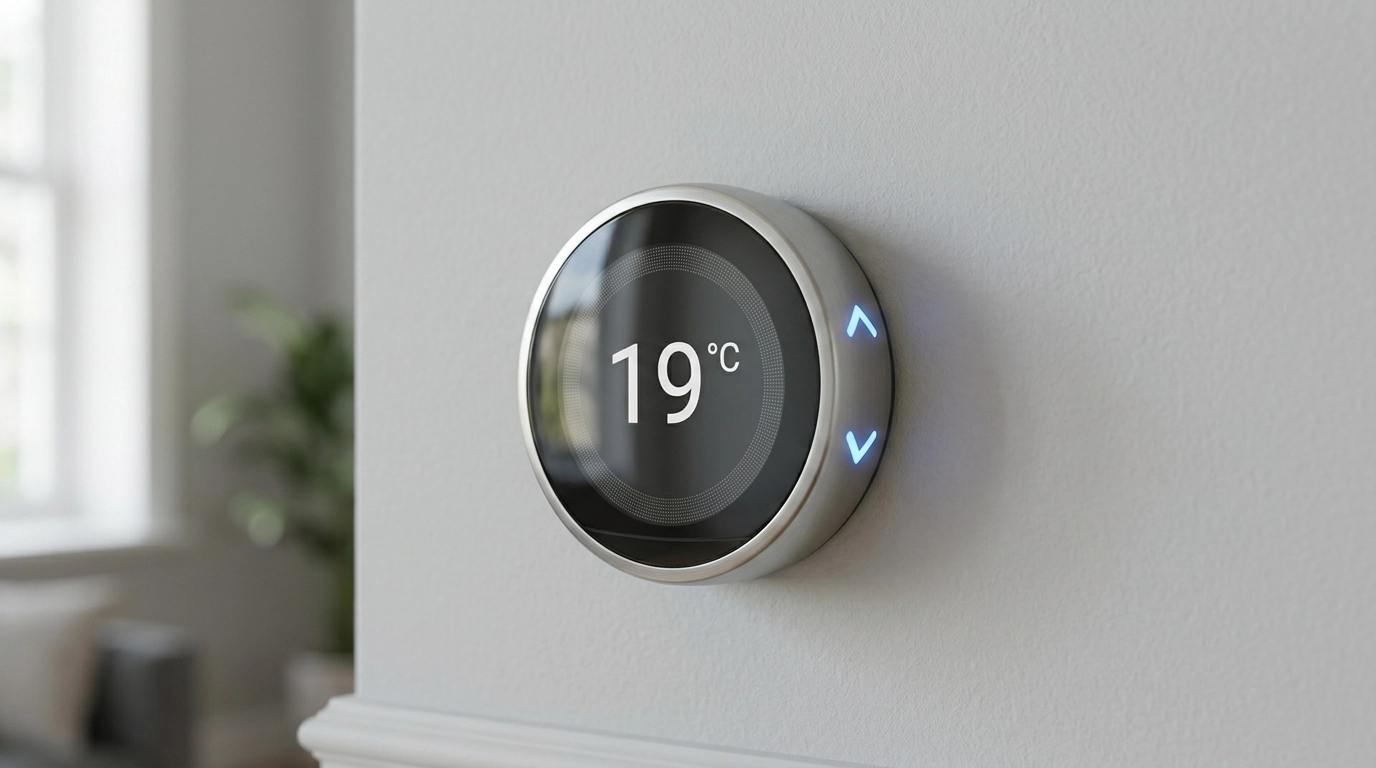
It sounds like a small change, but the “1°C rule” is one of the most reliable ways to cut costs. According to the Energy Saving Trust, turning your room thermostat down by just one degree can save the average semi-detached home around £145 per year.
The Strategy:
Instead of cranking the heating up to 23°C when you feel a bit chilly, try setting it to a steady 18–19°C and wearing a jumper. If you have a smart thermostat, use its scheduling features to ensure you aren’t heating an empty house during the day or keeping it overly warm while everyone is tucked under duvets at night.
3. Don’t Ignore the “Health Check”: The Annual Boiler Service
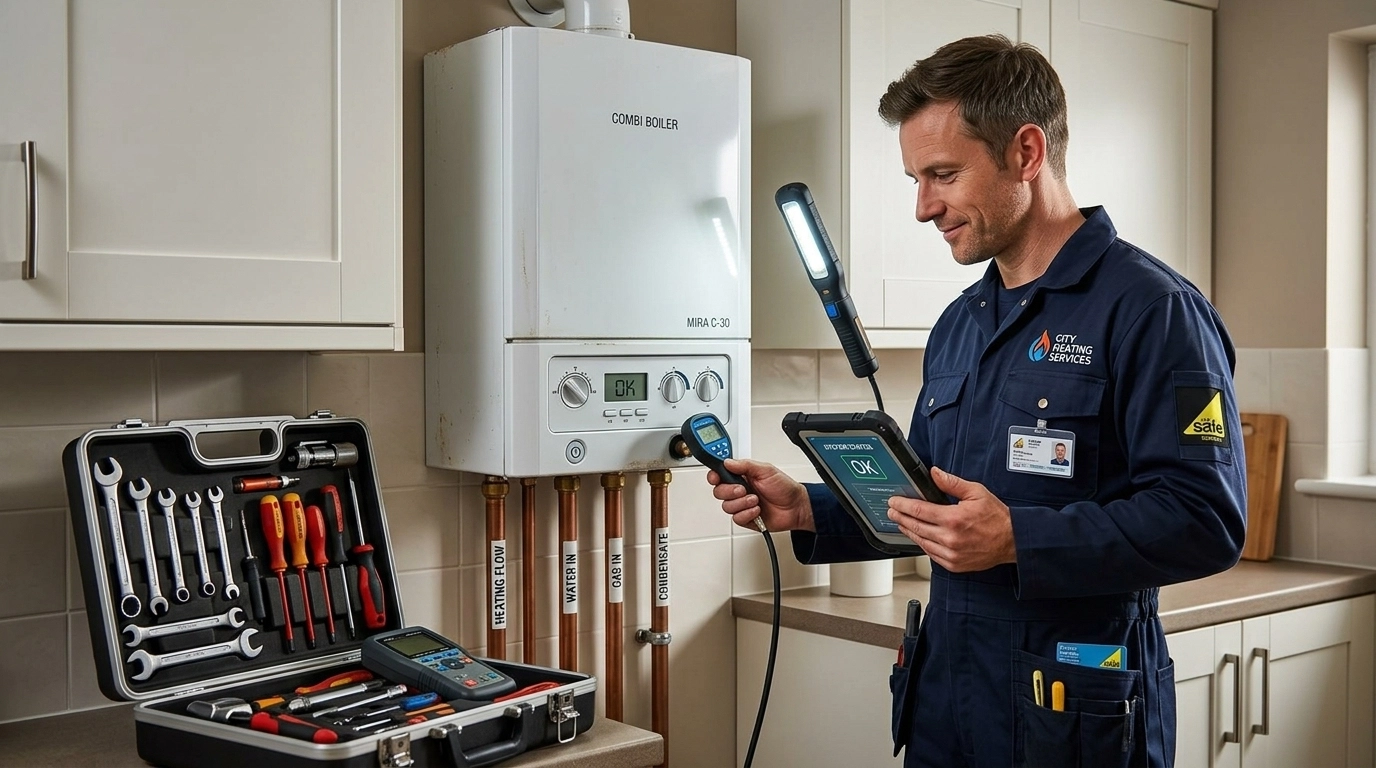
If you want to avoid an emergency boiler repair, there is no substitute for a professional annual service. Think of it like an MOT for your heating system. A qualified engineer from C & D Heating and Cooling Services Ltd doesn’t just check that the boiler is working; they deep-clean the internal components, check for gas leaks, and identify small parts that are beginning to wear out.
Why it saves you money:
- Efficiency: A clean boiler runs more efficiently, using less gas to produce the same amount of heat.
- Longevity: Catching a worn-out seal or a failing pump during a scheduled service costs far less than fixing a major breakdown in mid-winter.
- Warranty: Most boiler manufacturers require an annual service to keep your warranty valid. Without it, you could be left footing the entire bill for a major repair.
4. Master Your Radiators: Bleeding and Balancing
Are your radiators cold at the top but hot at the bottom? This is a classic sign that air is trapped inside the system. Trapped air prevents the hot water from circulating effectively, meaning your boiler has to work harder and run longer to reach the temperature set on your thermostat.
The Fix:
Bleeding your radiators is a simple DIY task that can make a noticeable difference to your home’s warmth. Use a radiator key to open the valve at the top of the radiator until water starts to trickle out (have a cloth ready!). Once the air is gone, your radiators will heat up evenly, reducing the strain on your boiler.
Pro Tip: If you have rooms you rarely use, such as a guest bedroom or a large storage cupboard, turn the Thermostatic Radiator Valve (TRV) down to ‘1’ or ‘*’ (the frost setting). There is no point paying to heat a room that no one is sitting in!
5. Insulation and Draught-Proofing: Keep the Heat In
You can have the most efficient boiler in the world, but if your home is leaking heat through gaps in the doors and windows, your bills will remain high. Draught-proofing is one of the cheapest and most effective ways to save energy.
- Doors and Windows: Use self-adhesive foam strips to seal gaps around window frames and “brush” draught excluders for the bottom of external doors.
- The Loft: If your loft insulation is less than 270mm thick, you are effectively letting money float out through your roof. Upgrading your insulation can save you upwards of £200 a year.
- Pipe Lagging: Fitting foam tubes around your hot water pipes (especially those in unheated areas like the garage or loft) keeps the water hotter for longer as it travels to your taps and radiators.
6. How to Spot a Problem Before it Becomes an Emergency
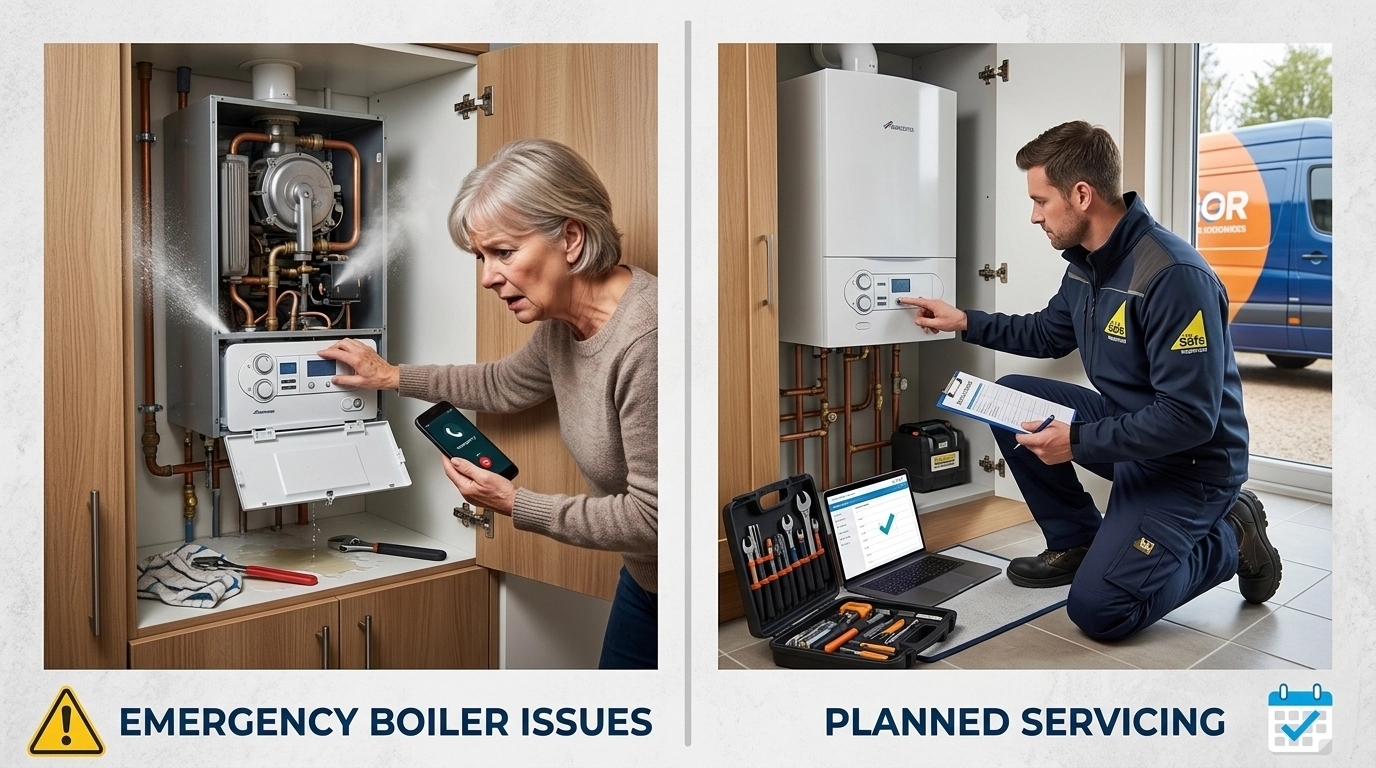
You don’t always need to be a heating expert to know when your boiler is struggling. Keeping an eye (and an ear) out for these warning signs can help you book a standard repair visit rather than an expensive emergency boiler repair:
- Strange Noises: Bangs, whistles, or gurgling sounds (often called “kettling”) usually indicate a buildup of limescale or air in the system.
- Pressure Drops: If you find yourself having to top up your boiler’s pressure every few weeks, you likely have a small leak somewhere in the system.
- Yellow Flame: Your boiler flame should always be a crisp, steady blue. A yellow or orange flame is a serious warning sign of incomplete combustion and potential carbon monoxide. If you see this, turn off your gas and call a professional immediately.
- Slow Response: If your radiators are taking much longer to heat up than they used to, your pump or heat exchanger might be failing.
7. Smart Tech for 2026
By 2026, the integration of smart home technology has made it easier than ever to monitor energy consumption. Many energy providers now offer time-of-use tariffs. If you have a smart meter, you can see exactly which appliances are costing you the most in real-time.
At C & D Heating and Cooling Services Ltd, we often recommend smart thermostats like Nest or Tado. These systems “learn” how long it takes to heat your specific home and can even turn the heating off automatically when they detect that everyone has left the house via your phone’s GPS.
Conclusion: Prevention is Cheaper than Cure
Lowering your heating bills doesn’t require a lifestyle overhaul. By making small adjustments to your boiler’s flow temperature, being mindful of your thermostat, and ensuring your home is well-insulated, you can keep your costs under control.
However, the single most important step you can take for peace of mind is staying on top of your maintenance. A well-maintained system is a reliable system. Don’t wait for the first frost to find out your boiler isn’t up to the task.
Is your boiler due for its annual service? Or have you noticed a strange noise that’s making you nervous?
Don’t wait for a breakdown. Contact the professional team at C & D Heating and Cooling Services Ltd today. We provide expert installation, maintenance, and repair services for residential and commercial properties across the region. Let us help you keep your home warm and your bills low.
Visit our homepage to book your service today!
Disclaimer: All gas work in the UK must be carried out by a Gas Safe registered engineer. Never attempt to open your boiler casing or work on gas pipework yourself.